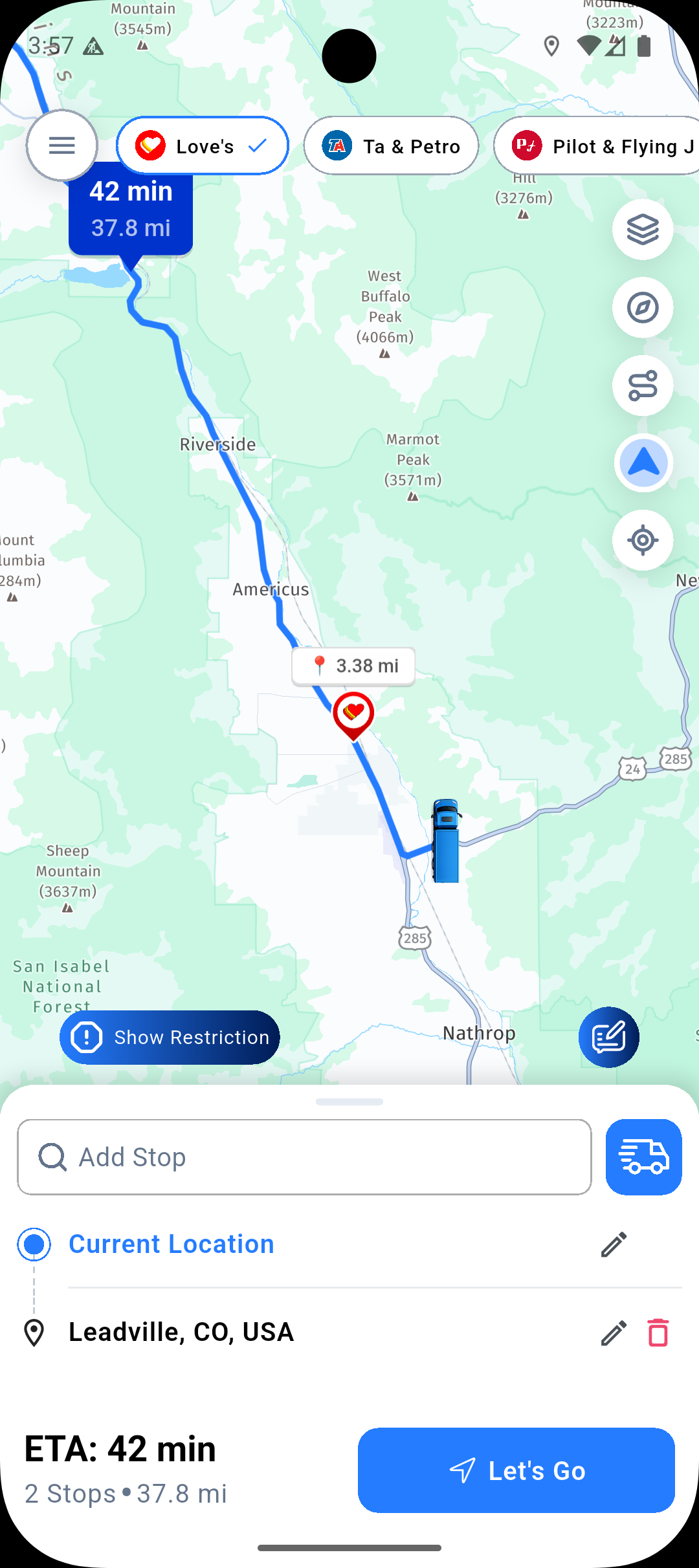
Why this matters for commercial drivers
Fuel Stop Planning for Truck Routes: Save Time Without Risky Detours is not just a technology topic. For a working driver, it affects appointment times, safety, fines, fuel burn, and the stress level inside the cab. A route that looks fine for a passenger car can become a serious problem when the vehicle is 13 feet 6 inches tall, 80,000 pounds, or carrying regulated cargo.
Truck GPS is built around the details that passenger navigation apps usually ignore: vehicle height, gross weight, axle limits, Hazmat class, road restrictions, truck parking, diesel stops, and safer turn-by-turn guidance for large vehicles.
What to check before you start the route
- Confirm your truck height, width, length, gross weight, and axle configuration.
- Update cargo settings when hauling Hazmat, refrigerated freight, oversize loads, or high-value goods.
- Review route preferences for ferries, tolls, tunnels, highways, and unpaved roads.
- Check fuel, parking, rest breaks, delivery windows, and likely weather conditions before departure.
- Keep a fallback plan ready if construction, traffic, or a road closure changes the route.
How Truck GPS helps
The app calculates routes with truck-specific constraints before navigation begins. That means the safest route is planned around your actual profile, not a generic car profile. When the road changes, Truck GPS helps drivers adjust without guessing whether the detour is legal or safe for the truck.
Driver tip: Save separate profiles for each truck and trailer combination you use. Switching profiles is faster and safer than editing dimensions during a busy dispatch day.
Best practices for safer routing
Do not wait until you are close to a bridge, tunnel, weigh station, or restricted street to think about compliance. Build those constraints into your route from the beginning. Good route planning protects your CDL, your cargo, your equipment, and everyone sharing the road.
For owner-operators and fleets, consistent route planning also makes costs more predictable. Fewer wrong turns, fewer surprise detours, fewer preventable tickets, and fewer service failures all add up over thousands of miles.