Why Hazmat Routing Is Different
Transporting hazardous materials is one of the most regulated activities in commercial trucking. Unlike standard freight, Hazmat loads require special routing that avoids populated areas, certain tunnels, proximity to water supplies, and other sensitive zones defined by the Pipeline and Hazardous Materials Safety Administration (PHMSA) and the Department of Transportation (DOT).
Using a standard GPS for a Hazmat run isn't just non-compliant — it's potentially catastrophic. The 2001 Baltimore tunnel fire, caused by a train carrying hazardous materials, is a reminder of what happens when Hazmat incidents occur in confined spaces. Truck GPS is designed to prevent these situations from the routing level.
Understanding DOT Hazmat Classes
The DOT classifies hazardous materials into 9 classes, each with different routing requirements:
- Class 1 — Explosives: Requires routing away from populated areas and most tunnels. Explosives transport requires special federal permits in most states.
- Class 2 — Gases: Flammable gases (2.1), non-flammable gases (2.2), and toxic gases (2.3) each have slightly different tunnel restrictions. Class 2.3 is the most restrictive.
- Class 3 — Flammable Liquids: Gasoline, ethanol, diesel. Restricted from many tunnels and underground passages.
- Class 4 — Flammable Solids: Self-reactive substances and materials that are dangerous when wet. Routing varies significantly by subclass.
- Class 5 — Oxidizers: Can significantly intensify fires. Routing restrictions similar to Class 3 in most jurisdictions.
- Class 6 — Toxic Substances: Includes poisons and infectious substances. Class 6.2 (infectious substances) has the most stringent routing requirements.
- Class 7 — Radioactive: Requires special DOT approval for routing, specific packaging, and often a law enforcement escort for high-activity materials.
- Class 8 — Corrosives: Acids and bases. Restricted from some tunnels but generally the least restricted class for routing.
- Class 9 — Miscellaneous: Includes lithium batteries, dry ice, and other materials. Requirements vary widely by specific material.
⚠️ Remember: You must display the correct DOT placard on all four sides of your vehicle. Truck GPS helps with routing but does not replace your responsibility for proper placarding and documentation.
Major Hazmat-Restricted Tunnels in the US
These tunnels have absolute prohibitions or significant restrictions for one or more Hazmat classes:
- Lincoln Tunnel (NJ/NY) — Prohibits Class 1, 2.3, 3, 4, 5, 6.1 per Port Authority regulations
- Holland Tunnel (NJ/NY) — Prohibits most Hazmat classes; only empty or Class 8 permitted with prior approval
- Baltimore Harbor Tunnel (MD) — All Hazmat classes restricted; use the Baltimore Beltway
- Ted Williams Tunnel (Boston) — Class 1, 3, and gases prohibited
- Eisenhower/Johnson Tunnels (CO) — Class 1 and some Class 2 restricted
- Caldecott Tunnel (CA) — Class 1, 3, and flammable gases prohibited in bore 3; all Hazmat in bore 4
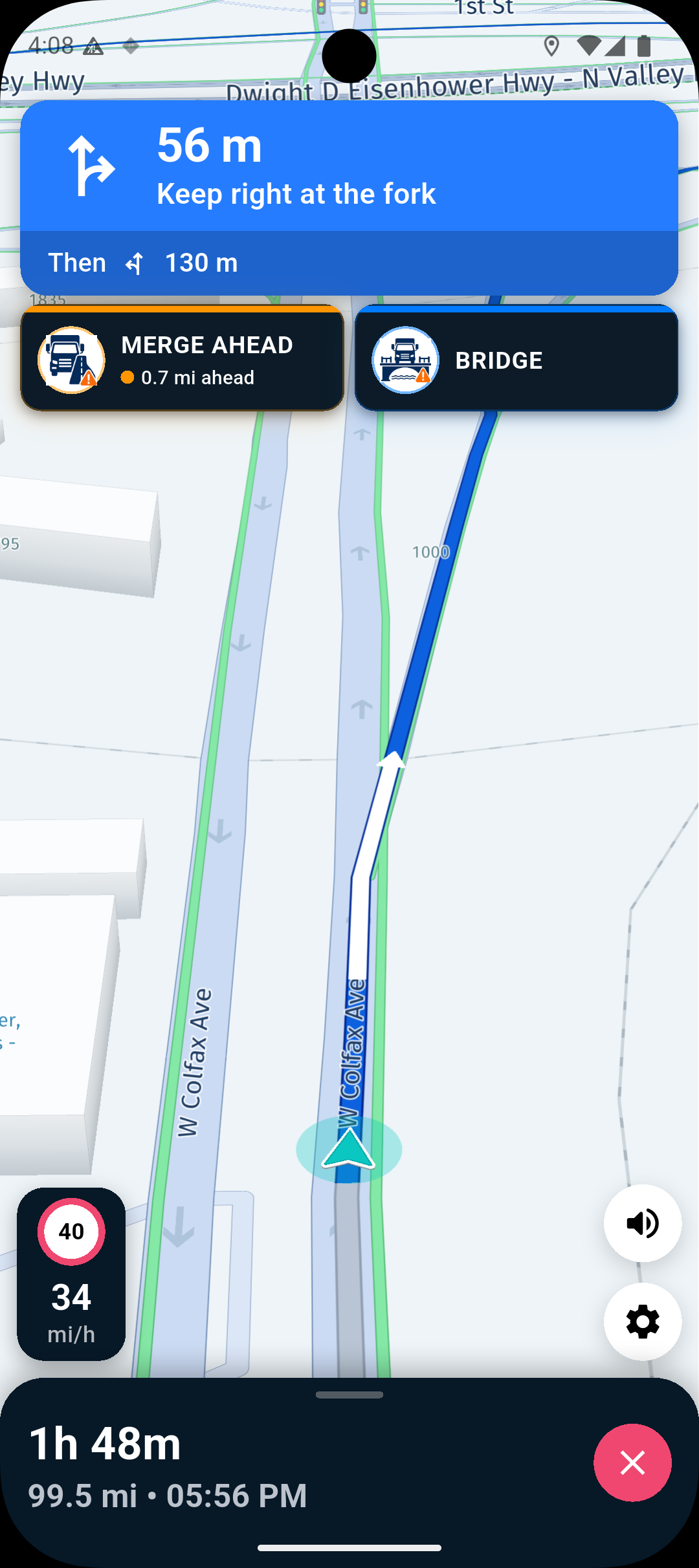
Truck GPS automatically routes around all of these tunnels when your Hazmat class requires it. The routing engine knows which bore of a multi-bore tunnel is restricted and will calculate the correct alternative without driver input.
How to Configure Hazmat in Truck GPS
- Open the app and tap My Trucks
- Select the truck profile you're using for this haul
- Toggle Hazmat Load to ON
- Select your DOT Hazmat class from the dropdown
- For Class 2 and 6, select the subclass as well
- Tap Save Profile — the routing engine will now apply Hazmat filters automatically
💡 Pro tip: Create separate truck profiles for Hazmat and non-Hazmat loads. Switching profiles takes 2 seconds and ensures you never accidentally use standard routing for a Hazmat haul.
State-by-State Hazmat Routing Requirements
Beyond tunnel restrictions, many states require Hazmat vehicles to use designated highway routes. New York City has some of the most complex Hazmat routing rules in the country, with different rules for the five boroughs. California requires special routing for radioactive materials shipments above certain activity thresholds.
Truck GPS maintains this state-specific routing database and applies it automatically. When you plan a route through New York City with a Class 3 load, the app automatically uses the designated Hazmat routing through the outer boroughs, avoiding the Lincoln and Holland Tunnels without you having to think about it.
Documentation to Carry
- Shipping papers (Bill of Lading) with Hazmat description
- Emergency response information (ERG 2024)
- Written route plan if required by state
- PHMSA Hazmat training certification
- Any state-specific permits for your load and route
Safe Hazmat transport is a partnership between the right equipment, proper training, and intelligent routing. Truck GPS handles the routing part — so you can focus on the road.